FOCUS: Facilitating the Implementation of Population-based Genomic Screening (PGS)
Helping us understand how contextual factors, organizational structures, and characteristics of the participant population influence implementation of large-scale PGS initiatives.
What is FOCUS?
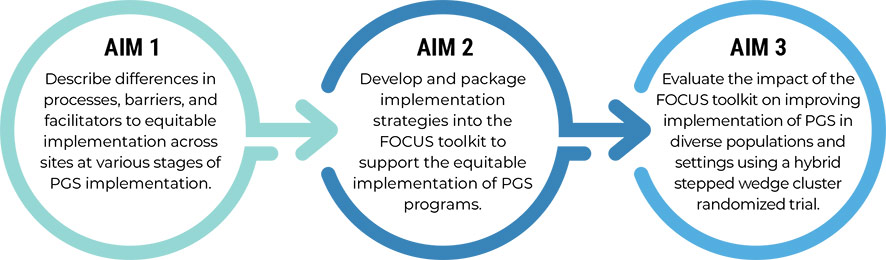
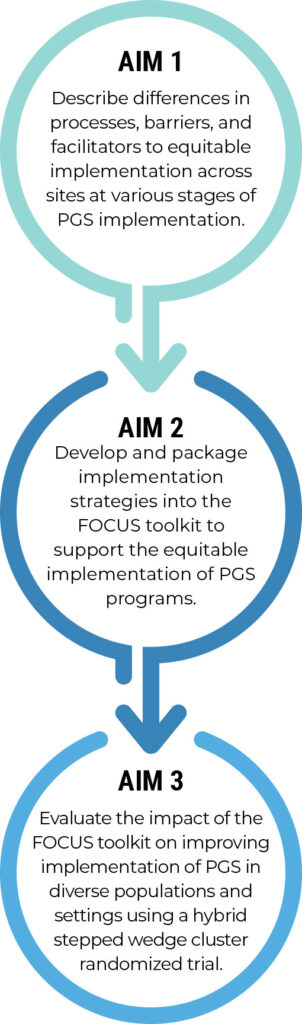
The overarching goal of the FOCUS project is to use an Implementation Mapping (Implementation Mapping: Using Intervention Mapping to Develop Implementation Strategies – PubMed (nih.gov)) approach to characterize PGS implementation processes, barriers, and facilitators across sites to create and validate a multicomponent implementation guide (FOCUS toolkit) to facilitate PGS in real world settings.
What is Population-based Genomic Screening (PGS)?
Population-based genomic screening (PGS) refers to the testing of a large group of people to look for specific variations that may increase risk for certain health conditions. By identifying these risks early, PGS can help people take steps to manage or prevent health issues before they arise.
Why do we Need FOCUS?
- PGS is being implemented around the US, but there are no clear guidelines or implementation strategies that exist to support the rapid growth of PGS.
- FOCUS will fill the gap in understanding how to implement PGS by establishing a gold standard approach for PGS implementation.
- FOCUS will help us understand how contextual factors, organizational structures, and characteristics of the participant population influence implementation of large-scale PGS initiatives.
The Scope of the FOCUS Project is National and Multi‑Site:
We will work with 22 sites at various stages of implementing PGS (pre-adoption, implementation, and sustainment) to begin developing and test the best approaches for equitable implementation of PGS.
Transforming Population Health
Our Approach for FOCUS
We use the Implementation Mapping (IM) process, consisting of five tasks, to guide our aims with the goal of producing and testing the utility of the FOCUS toolkit: a theory-based approach for facilitating implementation of PGS programs.