

Our FOCUS Team

A social and behavioral scientist with expertise in the implementation of evidence-based research to advance precision public health initiatives. She is a thought leader in the field of precision public health, with her work highlighted in Nature and Harvard Public Health Magazine. Her overarching research goal is to support the translation of genomics applications to maximize population health impact and address health disparities. To achieve this goal, Dr. Allen focuses on contributing to the field in three key areas: 1) participatory implementation science to support community engagement in genomics and precision public health research, 2) the training of community health workers in genomics research competencies, and 3) novel approaches to communicating genomic information to people representing a broad range of backgrounds (e.g., risk communication, results disclosure, family health history). Dr. Allen is also a dedicated mentor who is passionate about training the next generation of scientists in the field of precision public health.

Megan Roberts, PhD, is an associate professor in the Division of Pharmaceutical Outcomes and Policy and the Director of Implementation Science in Precision Health and Society at the UNC Eshelman School of Pharmacy. Her research focuses on evaluating and improving the implementation of genomic medicine. In particular, she is interested in conducting research to understand how precision medicine technologies can be implemented to improve access to and reduce disparities in high-quality care and prevention. To date, her research has largely focused on the intersection between genomic medicine, health equity and implementation science including research about the implementation of population genetic screening, cascade screening for hereditary conditions, precision diagnostics in low resourced settings both globally and in the US, and building capacity for precision public health.

Baker is a collaborative research statistician in the Department of Public Heath Sciences at the Medical University of South Carolina. Baker received his MS in Biostatistics from the Medical College of Georgia and joined the MUSC in 2008 as a Research Associate. Currently a Research Instructor, his research collaborations focus in areas of substance abuse treatment, PTSD and Mental Health, primarily in the analysis of substance use treatment and cessation as well as methods of abstinence measurement. Baker contributes as to multiple NIH-funded grants as the lead statistician and co-investigator.

Kimberly Foss is a Certified Genetic Counselor and Clinical Assistant Professor at the UNC School of Medicine in the Department of Genetics. Kim received her undergraduate degree in Biology with a minor in Chemistry from the University of North Carolina at Chapel Hill and her Master’s degree in Genetic Counseling from the University of Colorado Denver. She is certified by the American Board of Genetic Counseling.
In clinic, Kim has worked with both adult and pediatric patients. Her previous work includes adult cancer genetics and general pediatrics, with a special interest in the genetic etiology of brain malformations and epilepsy. Clinical supervision and teaching of genetic counseling graduate students is also a special interest of Kim’s.
Kim joined the UNC Department of Genetics in 2020 and is actively contributing to numerous clinical and translational research efforts. She is involved in the NCGENES whole-exome sequencing project and works on many of the initiatives of the Program for Precision Medicine. She is also a practicing genetic counselor working with patients in the Cancer and Adult Genetics clinics as well as partnering with other specialty clinics to better serve the patients of UNC.

Adam Buchanan is Associate Professor and Chair of the Department of Genomic Health at Geisinger. Mr. Buchanan is an NIH-funded investigator and board-certified and licensed genetic counselor with expertise in assessing genetic counseling outcomes and cancer risk management behaviors. His research interests include outcomes of genomic screening, delivery of genetics services, and performance of multi-cancer early detection tests. He is a former president of the American Board of Genetic Counseling.

As vice president of population health and implementation science, María E. Fernández, PhD, leads UTHealth Houston’s efforts in population health sciences including research to improve the integration of innovations and discoveries into real-world settings.
Her strategic vision for improving population health includes forging new collaborations within the university, engaging community partners and a wide range of stakeholders, and applying population health sciences across disciplines to address persistent and emerging population health needs. She also works with faculty to close research-to-practice gaps across health science disciplines to improve health, health equity, and quality of life. These efforts will boost UTHealth Houston’s profile as a leader in population health sciences.
As a champion of research to improve health equity in vulnerable populations, Fernández has spent her career designing and testing multilevel interventions to improve health and championing the adoption and use of evidence-based interventions, practices, programs, policies, and partnerships that help meet the health care needs of communities.
In 1998, Fernández joined the faculty of UTHealth Houston School of Public Health as an assistant professor of health promotion and behavioral sciences. Since then, she has been an active member of the school’s faculty, administration, and research community. She is the founding co-director of the UTHealth Houston Institute for Implementation Science, as well as director of the Texas Prevention Research Center and the Center for Health Promotion and Prevention Research at the School of Public Health.
Fernández, the Lorne Bain Chair in Public Health and Medicine, has contributed significantly to the field of cancer and chronic disease prevention and control, especially in underserved communities, and is renowned for her scientific leadership and mentorship of junior investigators. She serves as principal investigator on more than $40 million in active research funding from the National Institutes of Health, Centers for Disease Control and Prevention, the Texas Department of State Health Services, the Cancer Prevention and Research Institute of Texas, the Health Resources and Services Administration, the World Health Organization, and various other funders.
Prior to joining the UTHealth Houston faculty, Fernández earned multiple degrees from the University of Maryland, including a master’s degree in health education and a PhD in health education and behavioral epidemiology. She completed a National Cancer Institute-supported postdoctoral fellowship in cancer prevention and control at UTHealth Houston School of Public Health.
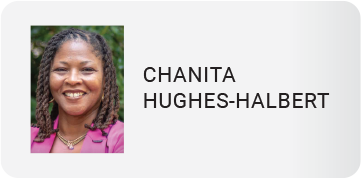
Dr. Hughes-Halbert serves as the Associate Director for Cancer Health Disparities. She is a nationally recognized leader in cancer prevention and minority health research. She has dedicated her career to reducing the disparities in cancer outcomes that affect patients. Among her many achievements, she has identified sociocultural, psychological, genetic and environmental determinants of cancer health disparities and translates this information into interventions to improve the health of multi-cultural populations. For her many contributions, Hughes-Halbert was elected to the National Academy of Medicine in 2017.
In addition to her election to the National Academy of Medicine, Hughes-Halbert received the American Cancer Society’s Cancer Control Award in 2010. President Barack Obama appointed her to the National Cancer Institute’s Board of Scientific Advisors in 2012, and in 2014 she joined the National Advisory Council of the National Human Genome Research Institute. The American Association for Cancer Research named her chair of its Minorities in Cancer Research Council the same year, and she received the AACR Distinguished Lecture Award on the Science of Cancer Health Disparities, funded by the Susan G. Komen Foundation, in 2018. She earned her master’s and doctoral degrees from Howard University after graduating summa cum laude from Hampton University.

Dr. Deborah Cragun has dedicated her life to helping people understand the role genetics plays in health. However, her journey to becoming the director of the genetic counseling program at the USF College of Public Health (COPH) began in an unexpected place.
Originally from Murray, Utah, Cragun initially resisted studying biology.
“When I was in high school, I wanted nothing to do with biology,” she said. But her interest shifted in college when she found herself grappling with health issues.
“I was trying to understand some health problems that I was having,” Cragun recalled. Soon, she realized that understanding her own health required a deeper dive into biology which guided her degree choices in college.
Cragun earned her bachelor’s degree in psychology and biology and then her master’s degree in medical genetics from the University of Cincinnati.
This exploration became more personal when Cragun’s father was diagnosed with a genetic condition after suffering a blood clot in his lung. The discovery raised concerns about implications for the entire family, yet Cragun noticed a gap in the care they received.
“How does someone get a genetic result and not talk about the family and what implications there are for the family?” she said.
This pivotal experience not only inspired Cragun to pursue genetic counseling but also ignited her drive to ensure that families receive holistic care.
Cragun earned her PhD in community family health from the COPH in 2013 and now leads research and trains the next generation of genetic counselors at the COPH with an emphasis on patient-centered care.
She reflected on how challenging it can be for patients when genetic counseling sessions are overly technical.
“Genetic counselors are supposed to help facilitate decision-making, not just throw out information and then ask, ‘Well, what do you want to do?'” she explained.
Cragun emphasized that information alone is not enough; patients also need guidance that considers their values and life circumstances.

Jarrod Marable is the Program Manager for the FOCUS Project with nearly five years of experience coordinating NIH-funded projects at the intersection of precision public health, genomics, and implementation science. He has been a key part of developing and executing grant applications, designing and implementing IRB-compliant protocols, and coordinating multi-institutional collaboration. For the FOCUS Project, Jarrod conducted the preliminary qualitative interviews with various different institutions who are involved in PGS. Following the interviews he was deeply involved in the qualitative analysis and the development of the implementation toolkit resources.

Rebecca is a spirited research project manager who brings energy, organization, and a can-do attitude to every project she tackles. During her time as a graduate student at UNC, she contributed to impactful research efforts at UNC Lineberger—and loved it so much, she came back for more. Now, as a MaTRIC Project Manager at the UNC Lineberger Comprehensive Cancer Center, Becca helps drive research efforts that emphasize collaboration, equity, and improving cancer-related health outcomes. With experience in project planning, community engagement, and program evaluation, she loves turning ambitious ideas into real-world results. Whether she’s juggling timelines or rallying teams, Becca is all about making a meaningful difference in the world of public health.

Cason Whitcomb is an early-career public health researcher, innovator, and story-teller looking to employ mixed methodologies and community-based participatory practices to better shape effective, equitable, and sustainable public health practices. Through this certificate, she is looking forward to in connecting with fellow innovators and learning more about how design-thinking can better support participatory program design and implementation.

Ingrid Wagner recently joined Dr. Caitlin Allen’s Precision Health Research Lab as a Research Assistant at Wake Forest University School of Medicine. She was introduced to genomics research during her MPH practicum at Boston University, where she examined racial disparities across the genetic services continuum of care. Ingrid is a detail-oriented and analytical writer and problem-solver, passionate about advancing equitable access to genetic services and personalized medicine.
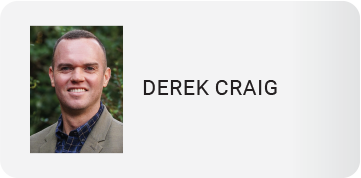
Dr. Craig’s research is focused on the intersection of school-based physical activity promotion and implementation science. He has worked closely with schools and districts across the United States to establish active school environments through the implementation of evidence-based practices. He has expertise in studying factors that influence schools’ readiness to provide a range of opportunities (i.e., physical education, recess, classroom-based approaches) that increase physical activity levels among students. His current work is focused on the promotion of a whole-of-school approach to physical activity and developing strategies to help schools improve the adoption and implementation of physical activity opportunities throughout the school day.

Mary-Louise E. Millett, MPH, is a PhD candidate in Health Promotion and Behavioral Sciences at the UTHealth Houston School of Public Health and the inaugural recipient of the SPH Doctoral Student Fellowship. Her research focuses on multilevel influences on healthcare delivery, access, and population health inequities, with interests in transgender health, gender-affirming care, HIV prevention and care delivery, and cancer prevention and survivorship. She integrates implementation science, health services research, behavioral science, and health geography to examine access to and delivery of healthcare among historically marginalized populations. Methodologically, her work incorporates geospatial and social epidemiologic approaches, electronic health record and population-level data integration, and mixed methods research to study healthcare systems, care delivery environments, and disparities in healthcare access and outcomes.
She has over six years of experience in implementation research. As a research coordinator and research assistant with the UTHealth Houston Institute for Implementation Science, she contributes to local, national, and international projects focused on advancing implementation science methods and healthcare delivery research.

Miranda Hallquist received her MSc in Genetic Counseling from the University of Toronto in 2006. After spending a few years as a full-time mom, she practiced clinical cancer genetic counseling for over seven years before transitioning to full time research. Miranda’s research interests surround increasing access to genomic information to guide health care decisions. She’s particularly interested in genetic counseling practice and population-based genomic screening (PGS). Miranda is currently a Senior Genetic Counselor at Geisinger and Director of Geisinger’s Genetic Counseling Assistant Program.